The AI layer
Conductor & Pro
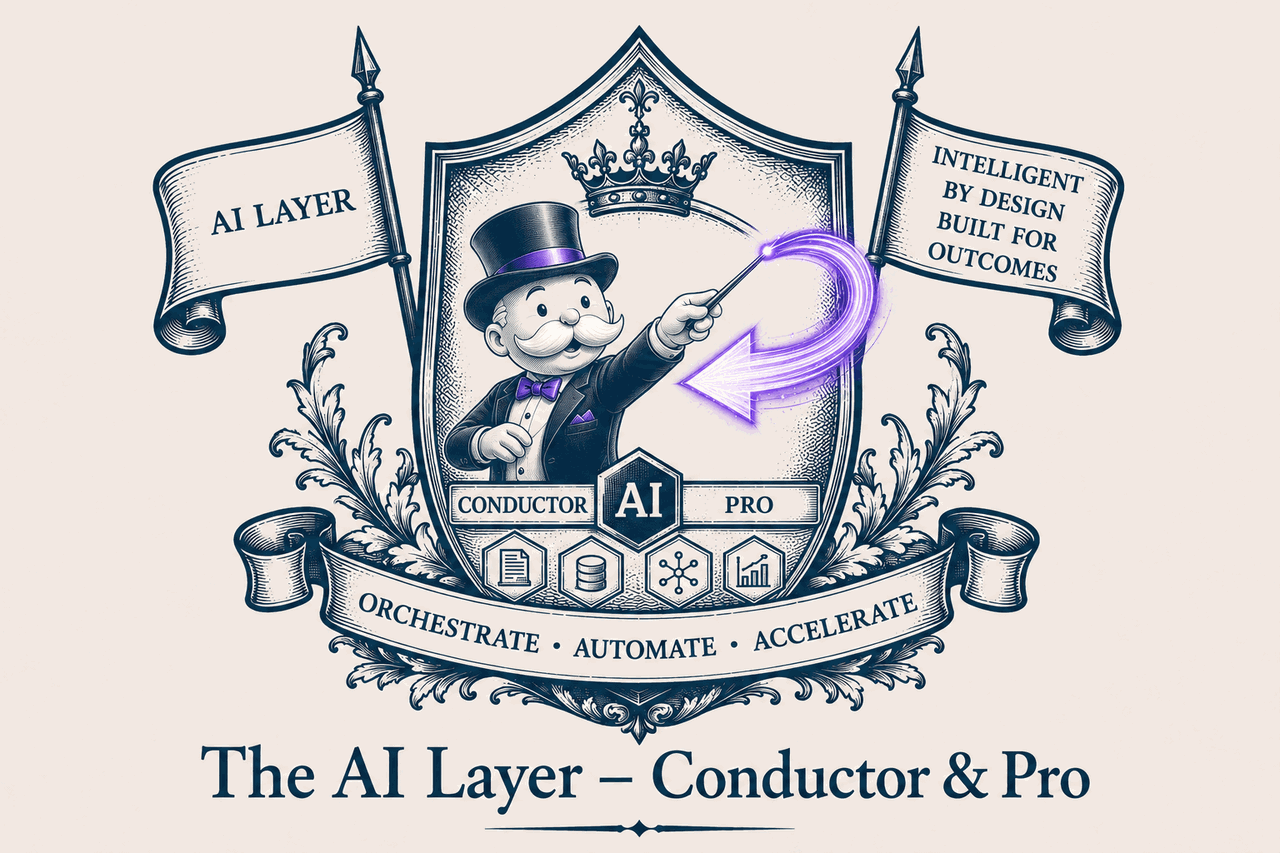
The expensive part of a CMDB engagement is not running a pipeline — it is authoring the configuration the pipeline runs on: source mappings, precedence, classification rules, the service model. In most engagements that authoring is weeks of senior-engineer time. In ServiceMatch it is done by the AI layer, and every artifact it authors lands on the decision record for your operator to review.
Conductor — the operator's governed interface
Conductor is the console your operator works in: a conversation that drives real, governed tools against the live workspace. It dispatches deep work, quality-gates the results, and explains what it did in terms of the decisions it wrote.
- Destructive actions require explicit confirmation — no blanket approvals.
- Each deployment runs against a pinned capability set; partner and trial installs get a reduced allowlist.
- Per-session spend caps bound the AI layer’s cost.
Pro — the deep-work specialist
Pro runs one focused activity per session: onboarding a new discovery source, authoring classification rules, designing the CSDM model, conducting a stakeholder interview. Each activity works from a written methodology and the evidence in your data — and produces configuration plus the rationale for it, never silent changes.
Why governed authoring works
- Everything authored is reviewable: rules, mappings, and placements arrive with rationale and evidence, and operator overrides always win.
- Recommendations carry confidence bands; below-threshold inferences become questions, not facts.
- The pipeline runs standalone — if the AI layer is unavailable, processing continues; only authoring assistance pauses.
Knowledge boundaries
Methodology improves across engagements; customer specifics do not travel. What the AI layer learns about one environment stays in that environment — cross-engagement knowledge is generalized methodology, promoted through human review.